




Hospitality
Inside Coconut Grove’s Great Hotel Turnover

Miami’s oldest neighborhood is having its most consequential real estate moment in a generation, as landmark hotels change hands, condo boards weigh nine-figure buyouts, and institutional capital races to claim a piece of Biscayne Bay’s most storied shoreline.
There is a particular kind of quiet that settles over old-money enclaves right before everything changes. Walk South Bayshore Drive on a June evening, past the banyan canopy, the sailboats tacking home into Dinner Key, the low hum of a neighborhood that has always resisted Miami’s habit of reinventing itself every decade, and you would be forgiven for missing it. But behind the hedges and the historic facades, Coconut Grove’s hospitality landscape is being rewritten at a pace the Village hasn’t seen since the Ritz-Carlton first broke ground at the turn of the millennium.
In the span of roughly eighteen months, three of the Grove’s defining hotel properties, the Mutiny, the Ritz-Carlton, and the Mayfair, have each become the subject of a major ownership event: a live buyout offer, a billionaire-backed reacquisition, and a nine-figure trade to one of Wall Street’s most feared activist investors. Add a fourth, quieter transaction, the sale and planned residential conversion of the Residence Inn, and the picture comes into focus. Coconut Grove is no longer simply a leafy, bohemian counterpoint to Brickell and South Beach. It is now one of the most contested pieces of hospitality real estate in South Florida.
The Mutiny: Miami’s Most Legendary Hotel Goes on the Auction Block
No property carries more mythology than the Mutiny. Built in 1968 as an apartment building on South Bayshore Drive, it was reborn in the mid-1970s as the epicenter of Miami’s cocaine-boom decadence: a members-only club where Hollywood stars mixed with the drug kingpins whose fortunes were remaking the city, and whose exploits reportedly inspired the “Babylon Club” sequences in Scarface. It has been called, by one former staffer, the “Taj Mahal of debauchery.” The building went dark in the early 1990s and was reborn again in 1998 as a 170-unit condo-hotel, its units ranging from sub-600-square-foot studios to a sprawling 3,300-square-foot penthouse overlooking the bay.
Now the Mutiny is at the center of Coconut Grove’s biggest deal in play. Aventura-based BH Group, led by Isaac and Liat Toledano, is pursuing a bulk buyout of the entire 12-story building at roughly $160 million, notifying all 170 unit owners of its intent and beginning to issue individual purchase offers this year. It is the third such approach the building has fielded since late 2024, first from DaGrosa Capital, the firm where former Miami Mayor Francis Suarez serves as senior partner, then from a partnership between West Palm Beach developer Steven Figari and New York’s Slate Property Group, and now from BH Group, which has matched the $160 million figure. Condo board leadership has confirmed the offer is active, with BH Group seeking commitments from at least 140 of the 170 owners to move the redevelopment forward, a plan that, if it clears the finish line, would see the storied waterfront hotel razed and replaced with a new luxury condominium tower. BH Group has separately been assembling a position nearby, having partnered with Mast Capital to acquire more than 75 percent of the units at Bayshore Park, a short walk down the same street.
The Ritz-Carlton: A Homecoming for Gencom
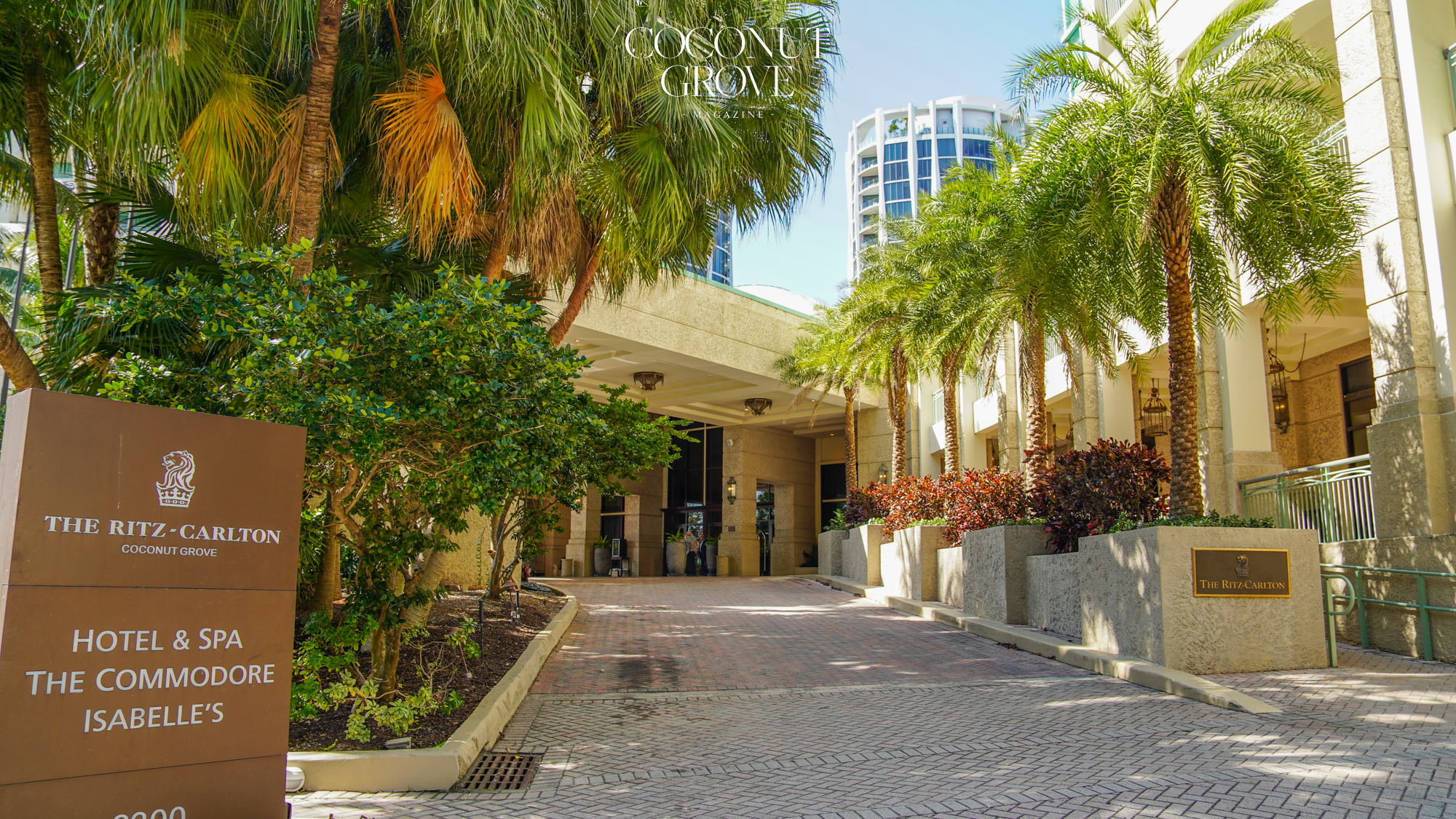
While the Mutiny’s fate hangs in the balance, the Ritz-Carlton Coconut Grove has already found its answer, in the form of its original owner. Miami-based investment firm Gencom, led by founder Karim Alibhai, has reacquired a majority interest in the 115-key hotel at 3300 SW 27th Avenue, financed through Banco Inbursa. Gencom’s history with the property runs deep: a Gencom-led venture first acquired the hotel in 2011, then sold a majority stake to Hersha Hospitality Trust in 2017 for a reported $24.6 million. Now, with Hersha shedding hotel assets (the Ritz sale was part of a broader six-property, $216 million divestment), Gencom has stepped back in to reclaim the property it once built into one of the Grove’s crown jewels.
The 21-story hotel, which opened in 2002 and underwent a significant renovation in 2018 that introduced Isabelle’s restaurant and the Commodore cocktail bar, sits directly across from the site of the newly sold Residence Inn, itself a telling footnote in the Grove’s turnover: Hersha sold the 140-unit, three-building property for $31 million to AB Asset Management, which plans to convert it from hospitality into apartments, one more hotel key permanently leaving Coconut Grove’s inventory as the neighborhood’s residential boom accelerates.
Gencom’s move is a bet on a neighborhood it already knows intimately. The firm’s founder pointed to the timing as advantageous, framing the reacquisition as a chance to build on the Ritz-Carlton’s legacy through disciplined reinvestment in what Gencom considers one of Miami’s most durable luxury submarkets.
The Mayfair: Wall Street Arrives in the Grove
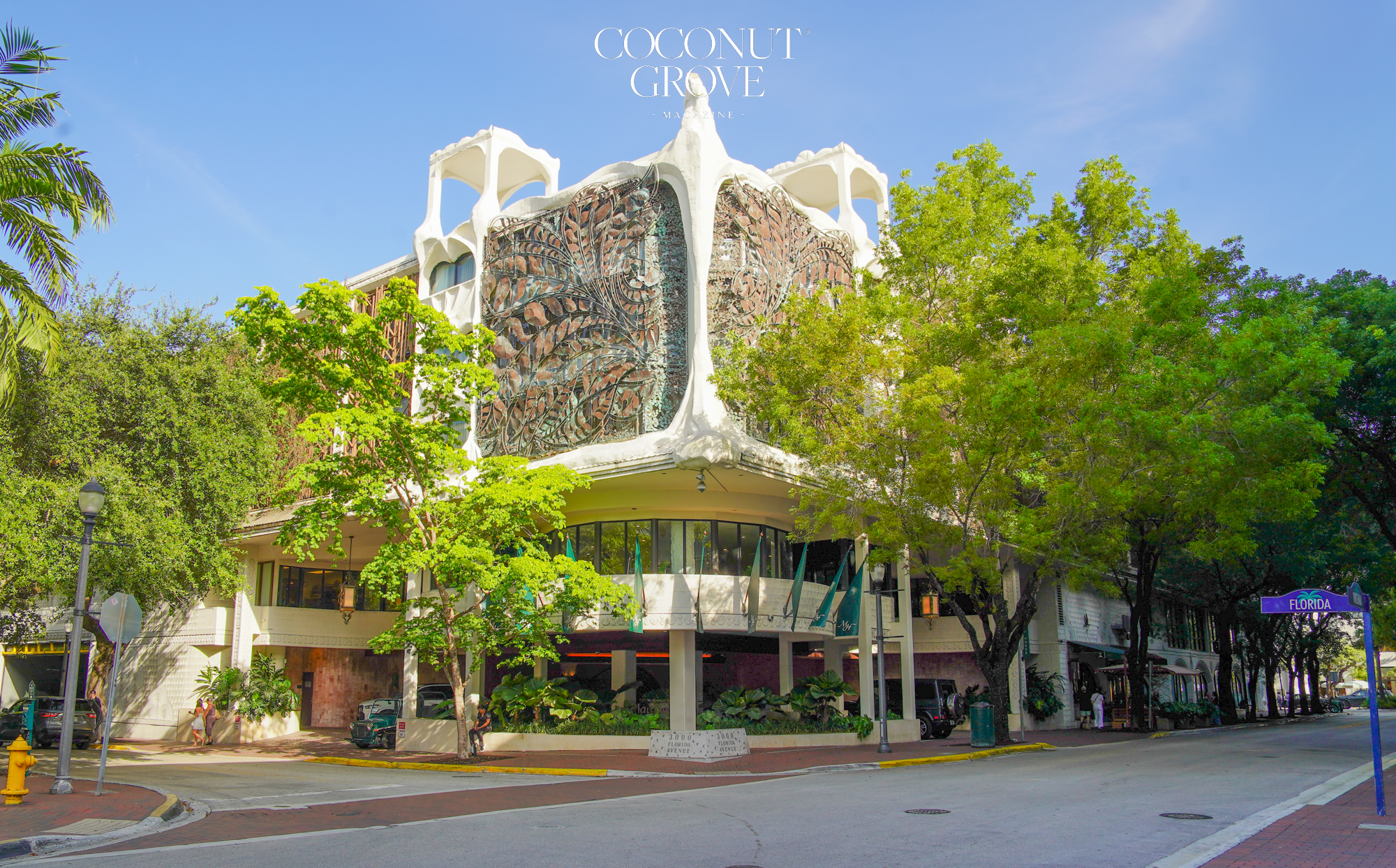
If the Ritz-Carlton deal was a homecoming, the sale of the Mayfair House Hotel & Garden marks something new entirely: the arrival of activist Wall Street capital in Coconut Grove’s hospitality scene. The 179-key, jungle-canopied boutique hotel at 3000 Florida Avenue, long one of the Grove’s most photographed properties, with its rooftop pool, open-air arrival experience, and Two-Michelin-Key dining pedigree, was sold by Brookfield Asset Management to entities affiliated with billionaire hedge fund manager Paul Singer’s Elliott Investment Management, in partnership with Lifestyle Hospitality Capital Group, for approximately $110 million. Brookfield had acquired the property for roughly $40 million in 2019, making the sale a striking marker of how far Coconut Grove hospitality values have run in just a few years.
The Mayfair transaction lands just months after its adjoining retail and office complex, Mayfair in the Grove, completed a $37 million renovation of its Promenade and lobby and secured a fresh $113.6 million refinancing, a sign that new ownership across the Mayfair complex is committing serious capital to a property that anchors one of the Grove’s busiest pedestrian corridors, steps from CocoWalk.
Why Now
The confluence is not a coincidence. Brokers and investors point to the same forces driving buyers toward the Grove: a wave of new Class A office and luxury residential development, the ongoing reinvention of CocoWalk under Federal Realty Investment Trust, rising restaurant rents that reflect intense demand for ground-floor space, and a broader post-pandemic migration that has reshaped South Florida’s wealth map. Listing volume in the neighborhood’s residential market is reportedly running roughly 75 percent ahead of last year’s pace, and local commentary has begun describing the Grove, once regarded as Miami’s shabby-chic, sailing-club holdout, as a new epicenter of concentrated wealth.
For condo-hotel owners at properties like the Mutiny, that appreciation cuts both ways: rising insurance costs, escalating reserve requirements under Florida’s post-Surfside structural safety laws, and the sheer scale of unsolicited buyout offers have made redevelopment an increasingly attractive exit, even for owners sentimentally attached to a building’s history.
Hotels Currently in Play: A Buyer’s Scorecard
For investors and hospitality groups eyeing Coconut Grove, here is where the market currently stands:
Actively for sale / subject to a live buyout offer
- The Mutiny (Mutiny on the Bay), 2951 South Bayshore Drive: 170-unit condo-hotel; BH Group’s approximately $160 million bulk buyout offer is active, with individual owner offers being distributed. This is the only major Grove hotel with a live, unresolved sale process as of this writing.
Recently sold / ownership resolved (no longer on the market)
- The Ritz-Carlton Coconut Grove, 3300 SW 27th Avenue: reacquired by Gencom from Hersha Hospitality Trust (closed late 2025/early 2026).
- Mayfair House Hotel & Garden, 3000 Florida Avenue: sold by Brookfield Asset Management to Elliott Investment Management and Lifestyle Hospitality Capital Group for roughly $110 million (closed mid-2026).
- Residence Inn by Marriott Coconut Grove, 2835 Tigertail Avenue: sold by Hersha Hospitality Trust to AB Asset Management for $31 million; slated for conversion to apartments, exiting the hospitality inventory altogether.
For now, the Mutiny remains the one true opportunity on the table, a chance to own, or redevelop, the single most storied address in Coconut Grove’s history. Whether its owners choose preservation or the wrecking ball, the outcome will say as much about the neighborhood’s next chapter as any of the deals that came before it.
Property values, deal terms, and transaction statuses reflect publicly reported figures as of August 2026 and are subject to change as negotiations continue.