Real Estate
When Price Replaces Value

The real cost when value is measured by price per square foot.
By Guillermo Freixas
For Kenneth Treister, architecture was never simply about the design of a building. It was about creating places that reflected the environment around them. They carried an identity, a memory, and a sense of Miami within them. His work was that of an artist.
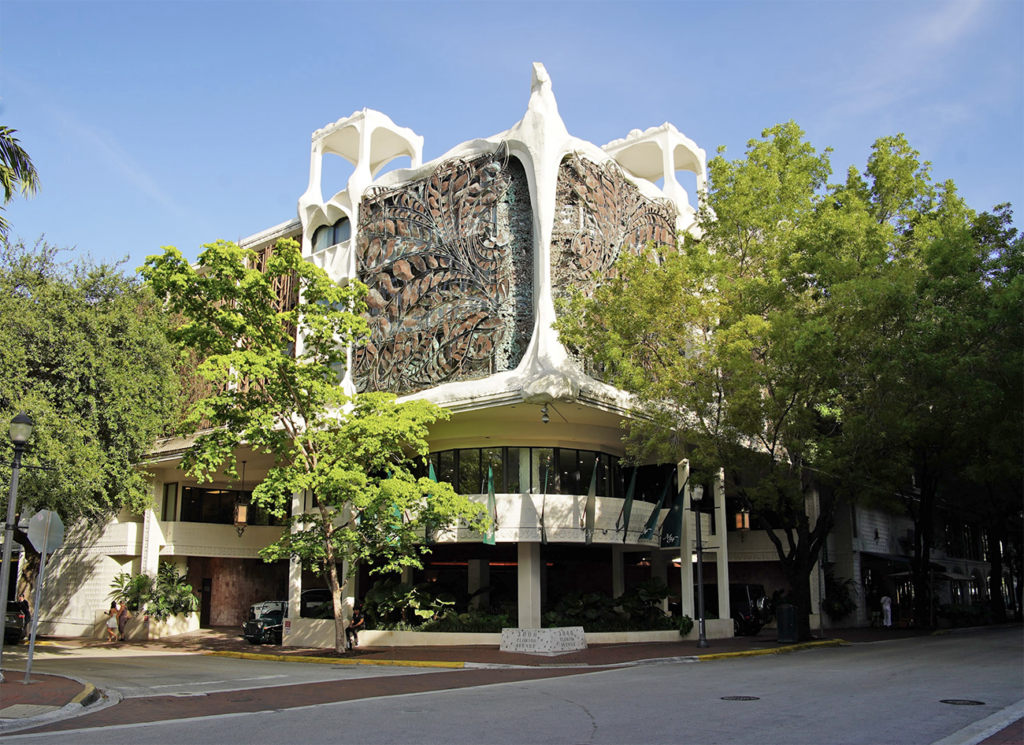
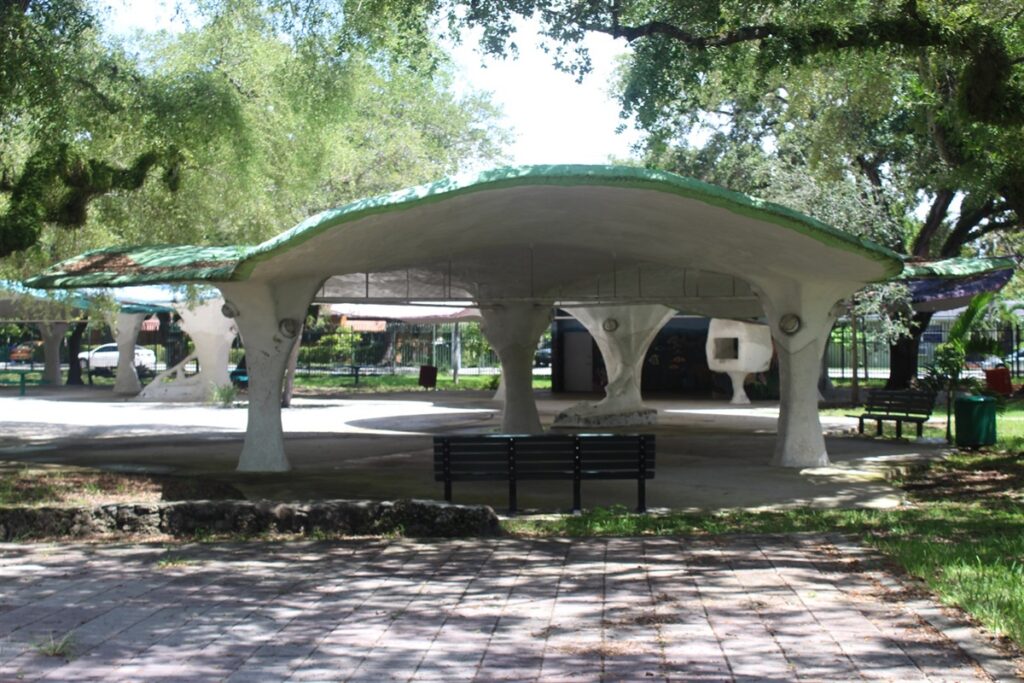
For decades, his work was part of the visual language of Coconut Grove. Yacht Harbour has a nautical quality, with a ship-like form that connects the building to the Grove’s long relationship with the water. The free-form concrete shelters at Elizabeth Virrick Park brought sculpture into an everyday public space. At the Mayfair, architecture, landscape, water, metalwork, furniture, and tropical planting became one immersive experience. The relatively small Office in the Grove had a unique presence on the oversized lot it occupied along South Bayshore Drive. And beyond the Grove, his Holocaust Memorial in Miami Beach turned architecture and sculpture into one of South Florida’s most powerful places of remembrance.
Treister, who died in August at 96, belonged to a generation that treated architecture as a cultural act. Miami has been shaped by several such figures. Morris Lapidus gave Miami Beach its theatrical glamour. Henry Hohauser and Lawrence Murray Dixon helped establish the architectural identity we now recognize as Miami Beach Art Deco. Alfred Browning Parker created a tropical modernism rooted in water, shade, wood, breeze, and landscape. Developer and city-builder George Merrick imagined Coral Gables as a complete place, with an identity that extended from its streets and plazas to its homes and public buildings.
They did not share the same style or philosophy, but they approached their work with intention. Each building reflected the architect who designed it, the period in which it was created and the Miami it was designed to serve.
That is why Treister’s passing made me think about the way we assign value.
When we look at a Warhol, a Picasso, a Basquiat, or a Monet, we understand almost instinctively why the work matters. We ask who made it, when it was created, how rare it is, what condition it is in, and where it fits within the artist’s career. We understand that its value is not measured by the canvas and paint alone. Its history, context, and even its imperfections can all become part of the story.
We apply the same thinking to a vintage Hermès bag, an old-school Porsche, or a Rolex watch that has survived generations. Age alone does not make an object valuable. Its authorship, rarity, craftsmanship, condition, and history do. Together, those things can turn an ordinary object into something irreplaceable.
With real estate, we often move in the opposite direction.
Buildings are expected to depreciate. Roofs fail. Concrete deteriorates. Electrical and mechanical systems become obsolete. Insurance, flood elevations, maintenance, accessibility, and life-safety standards are real concerns. I work in real estate, so I understand that land and improvements are evaluated differently, and that an older building can become economically or functionally outdated.
But depreciation is an accounting concept. Cultural value is something else.
A structure can lose value on a spreadsheet while gaining value in the story of a city. The problem is that cultural value is difficult to measure, while buildable square footage is very easy to calculate. When those two ideas meet on valuable land, history is usually at a disadvantage.
Treister’s Office in the Grove was a clear example. Completed in 1972 on South Bayshore Drive, the distinctive waterfront office building was designed around its setting. Its parking was tucked behind landscaped mounds rather than allowed to dominate the street, while its form and scale reflected an era of Coconut Grove architecture that is becoming increasingly rare.
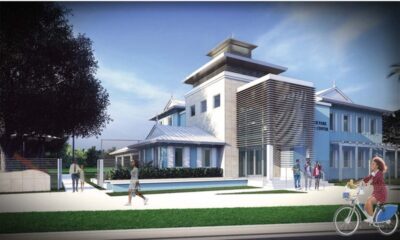
An effort to secure historic designation failed. The building was demolished in 2023. In its place, a 20-story Four Seasons Private Residences is rising with 70 waterfront units, with prices reaching into the double-digit millions.
From a real estate perspective, the calculation is not difficult to understand. A waterfront office building no longer represented the site’s highest and best use. Seventy luxury residences create more economic value than an aging commercial structure could. The market had spoken.
But markets are excellent at establishing price. They are not always as good at recognizing meaning or, dare I say, value.
I can walk into a newly completed penthouse overlooking Biscayne Bay and appreciate it. I love thoughtful design, beautiful materials, new technology, and the kind of views that can stop you in the middle of a room. I welcome new residents to Miami, and I take pride in helping them understand the city that raised me. Growth is part of Miami’s history too.
That is what makes my role complicated. I can see the beauty in what we are building while grieving what disappears to make room for it.
It is easy to dismiss this kind of attachment as sentimental. But the loss of a familiar place can reveal just how much meaning it carried. Miami has experienced that loss with the Orange Bowl, the Miami Herald building, the Deauville Hotel and Tobacco Road. These are cautionary tales about how easily a city can allow its own history to disappear.
These places were not equal in architecture, use or condition, but each held a piece of Miami’s collective memory. They gave us reference points. They allowed one generation to tell the next: “This is what stood here. This is what happened here. This is who we were.”
Preservation has become more difficult just as development pressure has intensified. Florida’s Resiliency and Safe Structures Act can override local protections and allow certain coastal buildings to be demolished without review by local preservation boards. If local communities lose the ability to weigh architectural and cultural importance, we risk treating demolition as the default answer to every difficult building.
Surely a city capable of engineering towers into the bay, raising roads, adapting buildings to hurricanes, and constructing homes hundreds of feet in the air can use some of that intelligence to preserve more of what already exists. Preservation does not have to mean freezing Miami in time. It can mean adaptation. It can mean restoring a facade while allowing a new use behind it. It can mean incorporating an older structure into a larger development. It can mean density in one place in exchange for preservation in another. It can mean incentives that make saving a building economically rational instead of financially punitive.
It requires technology and creativity, but also some heart.
Miami is in the middle of an extraordinary migration. New people arrive every day, while many people born and raised in the 305 are finding it harder to remain. I feel that contradiction personally. I want newcomers to love Miami. I also want there to be a Miami left for them to discover, not simply a collection of white boxes and glass towers that could stand in any wealthy coastal city.
This matters everywhere, but especially in Coconut Grove. The Grove’s value has never come only from its land or its waterfront. It comes from its layers: Bahamian history, artists, sailors, activists, architects, gardens, eccentric houses, narrow roads, old trees, and buildings that do not always make perfect financial sense. Remove enough of those layers and the Grove may remain expensive, but it will become less valuable in every way that cannot be entered into a spreadsheet.
Perhaps that is the shift we need to make. When we see a building by Treister, Parker, Lapidus, Hohauser, or Dixon, we should ask some of the same questions we ask about art. Who created it? What period does it represent? How rare is it? How much of the original work survives? What does it teach us? And once it is gone, can it ever be replaced?
A painting does not need to produce income to justify the wall space it occupies. A vintage watch does not need to tell time better than a new one. We preserve these objects because their value lies partly in the fact that they survived.
Our best buildings deserve the chance to survive too.
Kenneth Treister left Miami more than a collection of structures. He left evidence of a way of thinking: that architecture could hold memory, welcome nature, carry symbolism, and still be useful. His passing gives us reason to honor that legacy. The disappearance of some of his work gives us reason to decide whether the next generation will inherit a city with a story, or merely photographs of the one we replaced.

Ken Treister with Alfred Browning Parker. Photo credit: Robin Parker, son of Alfred Browning Parker